
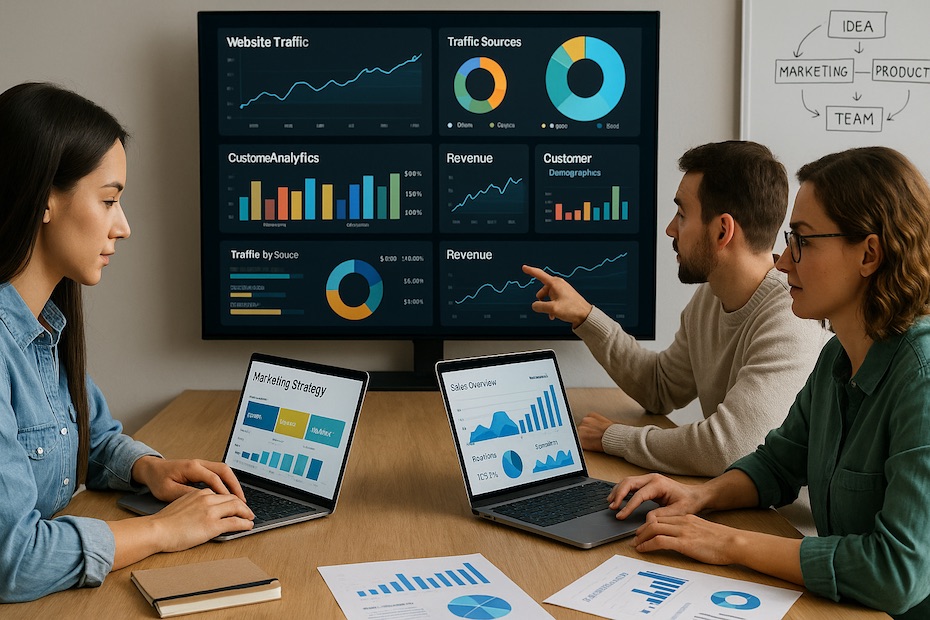
If you’re still relying on gut instinct and manual processes in your marketing strategy, you’re playing catch-up. AI and data aren’t optional anymore—they’re central to how today’s high-performing marketers run personalized, automated, and data-backed campaigns that convert. This article walks you through how to harness these tools, from AI-powered content and predictive analytics to automated ad optimization, without losing the human creativity that makes brands resonate. You’ll come away knowing how to use smart tech with intention—so your campaigns aren’t just efficient, they’re effective.
Use Data to Personalize Like a Pro
Your customers expect more than generic messages—they want relevance. That’s where AI-driven personalization shines. It allows you to tailor experiences based on user behavior, purchase history, and even browsing patterns in real time. You don’t need to collect massive amounts of data yourself either. Platforms like Klaviyo, Adobe Target, and Shopify already pull actionable insights from user behavior and plug them directly into dynamic content modules. You’ll send the right message to the right person at the right time—and watch your engagement rates rise because of it.
What makes personalization work isn’t just the data—it’s how you act on it. AI helps automate decision-making about which content to serve, which product to recommend, and when to make that move. When done well, this kind of targeting leads to significantly higher ROI, especially in email, SMS, and on-site product recommendations. You’re not guessing anymore. You’re responding in real time.
Let AI Take the First Draft
Writing every ad, blog, email, and landing page from scratch is time-consuming. That’s why more marketers are starting with AI-generated drafts. Tools like Jasper, ChatGPT, and Copy.ai can generate rough outlines, headline variations, and even full email sequences in seconds. But it’s not about publishing AI-generated content without editing—it’s about saving time on the draft so you can focus on tone, voice, and performance tweaks.
The key is using these tools to accelerate production without diluting your brand. Start with a solid prompt structure. Feed the tool your brand voice guide, previous high-performing content, and campaign objectives. Then rewrite the AI draft with clarity, personality, and human connection in mind. The results? Faster output and more time to test and optimize.
Predict Campaign Outcomes Before Launching
Every marketer wants to know what will work before spending a dime. With predictive analytics, you’re closer than ever to making that a reality. AI tools can process historical performance data to estimate future results, including click-through rates, conversion likelihood, and optimal send times. You’ll know which segments to target, what kind of content is likely to perform best, and which channels deserve your focus.
Platforms like IBM Watson and Salesforce Marketing Cloud offer these tools at the enterprise level, but small and mid-size businesses can access similar capabilities through integrations with Google Analytics 4 or HubSpot’s AI features. When you base your decisions on patterns—not just preference—you avoid waste and stretch your budget further.
Automate Your Ads with Machine Learning
Ad campaign optimization is where AI can really save you time and money. Instead of A/B testing manually, you can deploy machine learning algorithms that test dozens of creative combinations and automatically push budget toward the highest performers. Google Performance Max and Meta Advantage+ are good places to start if you want plug-and-play automation with real-time optimization.
What separates smart marketers is how they monitor this process. Automation doesn’t mean you walk away. Instead, keep a tight feedback loop. Watch for audience shifts, rising costs, or creative fatigue. Update your assets regularly based on what’s working. If you do, you’ll maintain performance without micromanaging every ad group.
Turn Feedback into Action with Sentiment AI
You don’t need another survey to understand how your audience feels. AI can analyze existing feedback across channels—social media, reviews, support chats—and highlight the language patterns that indicate satisfaction, confusion, or frustration. Sentiment analysis tools like MonkeyLearn and Lexalytics help you uncover the emotional tone of feedback at scale.
You can use these findings to fine-tune your messaging, product descriptions, or service processes. For instance, if customers repeatedly describe your checkout process as “confusing,” you know exactly where to focus next. These insights are fast, scalable, and often more honest than direct surveys.
Build Your Team’s AI Skills
Tech is only as useful as your team’s ability to apply it. While many marketers have access to AI tools, not all know how to use them strategically. That’s why it’s smart to invest in AI training—whether through internal workshops, hiring AI-savvy talent, or learning platforms like Coursera and HubSpot Academy.
Encourage your team to experiment. Let your content manager test AI-generated headlines, or have your PPC manager automate part of their bidding strategy. Track how these experiments impact performance metrics. Small wins build confidence—and confidence leads to better adoption.
Keep It Ethical and On-Brand
AI moves fast, but your brand’s trust takes years to build. That’s why you need clear content guidelines for tone, accuracy, and inclusivity. Even the best AI can generate content that’s off-mark or unintentionally biased. You’re still the filter—AI is your tool, not your decision-maker.
Before launching any AI-generated content or campaigns, review it for compliance, brand safety, and tone consistency. If you’re in a regulated industry, make sure legal or compliance is part of your workflow. And always test before you scale. One bad message can cause long-term damage, so slow down to speed up the right way.
Top AI-Driven Marketing Boosts for Fast Growth
- Personalize content by behavior
- Automate first-draft content
- Predict campaign performance
- Optimize ads in real time
- Analyze customer sentiment
In Conclusion
You don’t need to overhaul your entire tech stack to start using AI and data effectively. Focus on using what you have better—automate where it saves time, personalize where it improves connection, and predict where it saves money. The future of marketing isn’t about guessing; it’s about knowing. With AI and data on your side, you’ll run sharper campaigns, build stronger customer relationships, and outpace competitors who are still stuck doing things the hard way.

Vittorio Di Criscio is a tech entrepreneur and investor with over two decades of experience building and scaling online ventures since the dot-com era. He focuses on digital transformation and early-stage technology investments, and is an active philanthropist supporting education, technology, and entrepreneurship while mentoring emerging founders.