
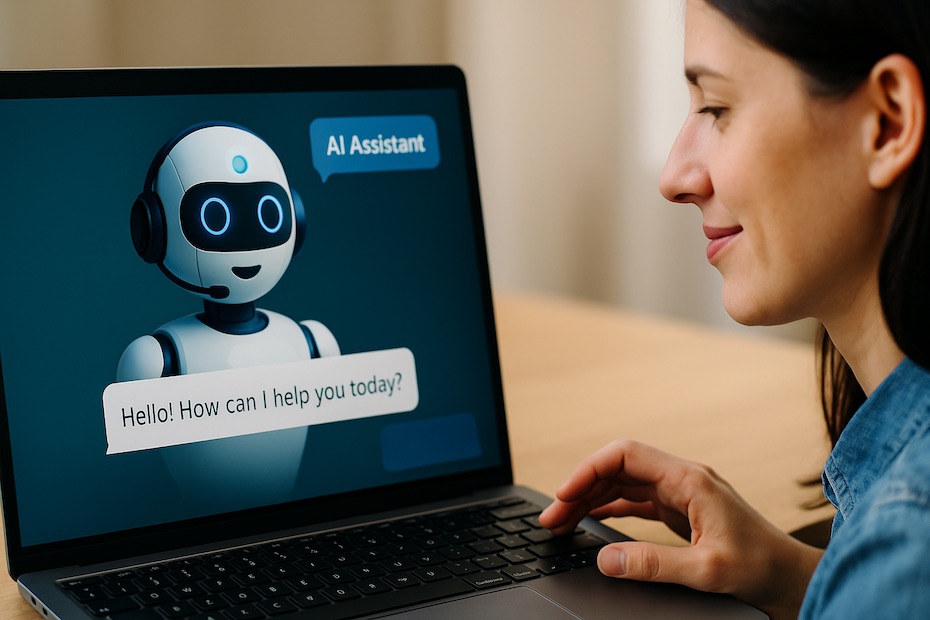
You’re likely looking for smarter ways to interact with your customers without overwhelming your team. Artificial intelligence offers you the chance to automate repetitive tasks, improve personalization, and increase customer satisfaction. By using AI correctly, you can speed up your response times, deliver tailored experiences, and handle larger volumes of engagement with fewer resources. This guide walks you through proven strategies, real-world examples, and actionable tips to help you adopt AI in a way that directly supports your business goals.
Use AI to Deliver What Customers Want—Faster
When customers contact your business, they want quick answers, personalized recommendations, and solutions that don’t feel canned. With AI, you can meet those expectations without hiring more staff. AI-powered tools like chatbots and virtual assistants are now advanced enough to resolve basic issues, provide product suggestions, and hand off complex cases to a human when necessary. Businesses that have adopted these tools report noticeable gains in response speed and customer satisfaction.
Take H&M, for instance. Their AI chat assistant now handles a large share of customer inquiries, helping to reduce wait times while increasing conversions. Customers can ask for outfit suggestions, store locations, and order updates—all through an interface that adapts to the shopper’s tone and preferences. That level of service used to require a full customer care team, but now it’s available instantly and around the clock.
Let AI Handle the Repetitive Stuff
One of the quickest ways to see a return from AI is by using it to take care of questions you receive over and over. You don’t need a support agent to answer “Where’s my order?” or “How do I reset my password?” These are tasks AI can handle with ease. Klarna implemented AI to take over roughly two-thirds of its customer service roles, yet user satisfaction stayed high. That’s because customers still got answers—faster, in many cases—with escalation paths available for more complex needs.
Beyond messaging, AI is also being used to power backend processes like ticket routing, refund approvals, and FAQ generation. These automations don’t just improve internal productivity—they shorten the time it takes your customers to get results. That, in turn, builds trust and loyalty.
Create Personal Experiences at Scale
AI isn’t just about speed. It’s also about helping you understand your customers better and treating them as individuals. AI models can track browsing habits, purchase history, and even timing preferences to suggest products or services they’re more likely to respond to. Major retailers like Sephora and Boohoo use this to recommend personalized promotions and trigger pricing adjustments in real time.
You don’t need to operate at their scale to benefit. If you run a Shopify store or sell digital services, AI tools like Dynamic Yield or Adobe Target can automate recommendations based on user behavior. AI helps you learn what works, test alternatives, and deliver relevant messages at just the right moment. When your emails or offers match someone’s actual needs, they’re more likely to convert.
Use AI to Detect and Prevent Churn
Many companies lose business because they don’t recognize when a customer is about to walk away. AI can help with that too. Sentiment analysis tools monitor language patterns, feedback scores, or support interactions to spot dissatisfaction before it escalates. You can then act—maybe by sending a tailored discount or having a support lead reach out with a personalized message.
Zendesk and Intercom both offer real-time monitoring for this purpose. Their AI looks for signals like longer response times, repeated questions, or angry language and flags those users. Instead of finding out someone canceled after it’s too late, you can re-engage them with an offer or a check-in message while there’s still time to fix the issue.
Keep the Conversation Going Across Every Channel
Customers don’t think in terms of “support channels”—they just want help. Whether someone contacts you by email, mobile app, website chat, or voice assistant, your message should be consistent. That’s where AI shines. You can plug into multiple touchpoints with a single customer experience engine that adapts language, tone, and recommendations automatically.
Adobe’s data shows that brands delivering connected customer experiences see up to three times higher engagement. That’s because people feel seen, even if the touchpoint changes. Instead of starting over every time they switch devices, they continue a single, fluid interaction. And that improves satisfaction without increasing your workload.
Learn from Companies Doing It Right
If you want to benchmark success, look at businesses that use AI not just to save time, but to improve loyalty. Zurich Insurance simplified its customer service interface with AI, reducing average resolution times by 70%. Bank of America’s “Erica” virtual assistant handles millions of interactions monthly, guiding users through account tasks in a tone that feels natural. These aren’t futuristic examples—they’re operating today.
Even in fast-paced sectors like fashion or groceries, companies are finding success. Walmart uses AI to restock shelves based on foot traffic and past trends. LVMH, the luxury goods company, uses AI to ensure pricing and communication consistency across different regions and currencies. These applications prove that AI can work across industries—and you don’t have to be a global brand to take advantage of them.
Start Small, Measure, Then Scale
You don’t need to overhaul everything at once. Pick a clear target—like reducing customer wait time or increasing repeat purchases—and start with one tool. Maybe you’ll deploy a chatbot that handles 20% of support requests, or add product recommendations to your emails. Track performance: how fast are people getting answers? Are more users clicking on offers? Are complaints going down?
With this data, you can make smart choices about what to improve next. AI works best when it’s built step-by-step. You train it, test it, and refine it based on what your real customers are doing. That way, every change has a measurable effect, and you avoid wasting time on flashy tools that don’t actually serve your goals.
Avoid the Common Pitfalls
Not all AI setups work out of the box. You’ll likely hit some bumps, but most can be fixed with the right feedback loop. If your chatbot gives off canned responses, retrain it using actual customer transcripts. If your AI recommendations aren’t converting, revisit the data it’s using. Are you tracking user behavior accurately? Is the algorithm prioritizing items people actually want?
Also, make sure your team stays involved. AI is there to assist—not to replace—your customer service professionals. When you involve them in training and improvement, they’re more likely to embrace the tech and help you get the most from it.
Key Tips to Boost Customer Engagement with AI
- Set up chatbots for 24/7 support
- Use AI to personalize offers and messages
- Monitor customer sentiment in real time
- Trigger smart discounts for abandoned carts
- Automate replies to frequent questions
- Connect AI across chat, email, and app channels
In Conclusion
AI is already transforming how businesses handle customer engagement, and you’re in a position to take advantage of that. Whether it’s handling simple questions with bots, sending personalized offers, or tracking customer mood in real time, there’s a tool available to help you meet your goals. Start with one clear objective, measure how it performs, and build from there. The companies seeing the biggest success with AI aren’t trying to impress—they’re solving problems. That’s what you should aim to do too.
Check out my podcast on Spotify, where I explore topics like AI, business innovation, and digital transformation. Join the conversation and stay ahead of the curve.

Vittorio Di Criscio is a tech entrepreneur and investor with over two decades of experience building and scaling online ventures since the dot-com era. He focuses on digital transformation and early-stage technology investments, and is an active philanthropist supporting education, technology, and entrepreneurship while mentoring emerging founders.